 Sorrento City Guidebook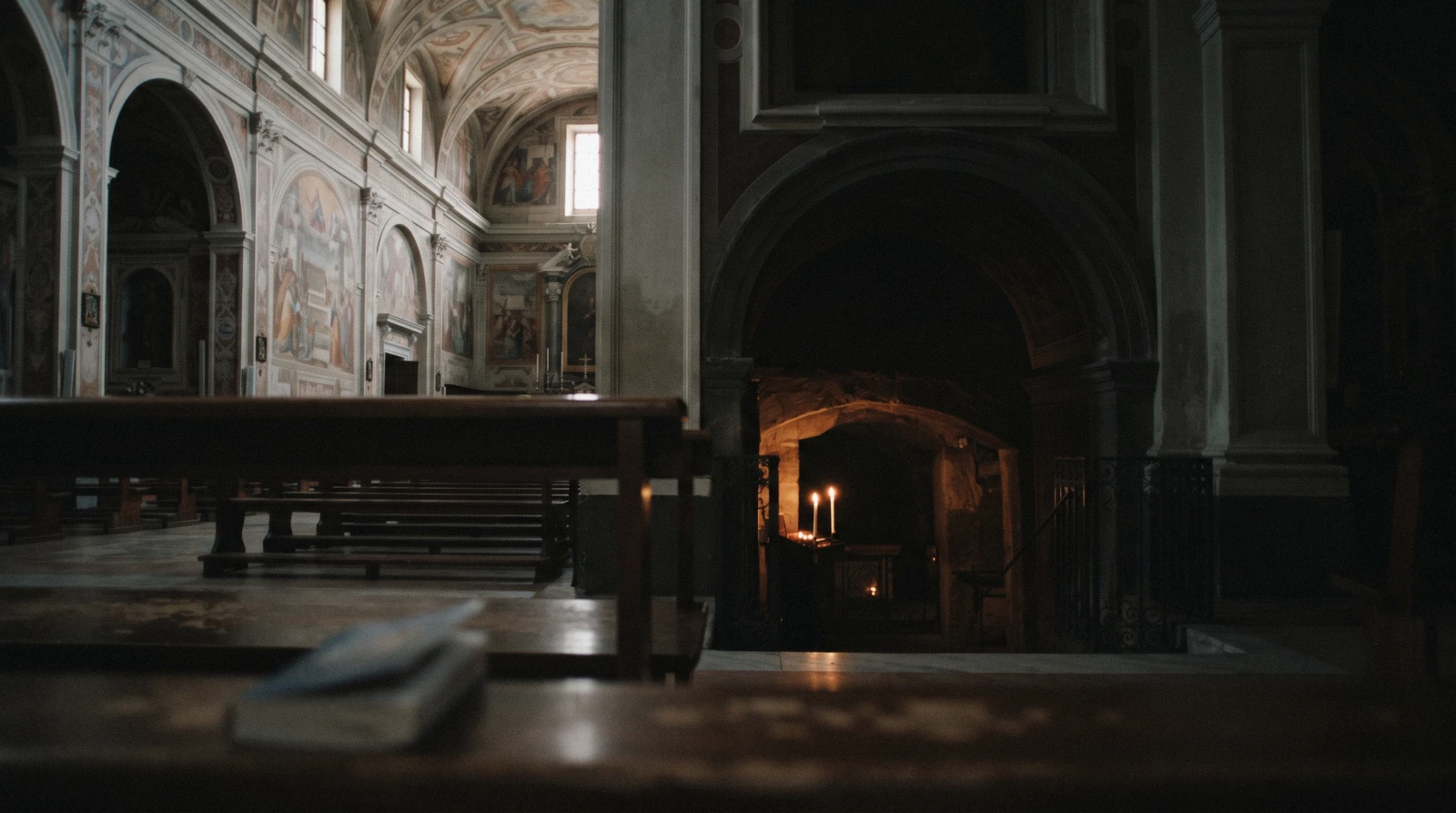
Basilica di Sant'Antonino, Sorrento: the patron saint's church
The Basilica di Sant'Antonino — in English searches, the basilica sant antonino sorrento — is the patron's church and the most-loved inside of any free room in town. The Basilica di Sant'Antonino is the church of Sorrento's patron saint and the most popular church in town by the diocese's own description: a grey tuff Romanesque facade on its own small square two minutes from Piazza Tasso, a crypt where the devotion actually happens, whale bones above the porch, and columns pulled out of Roman ruins to hold the nave up. Entry is free. This page covers what to look at, the feast of 14 February, and the honest answer on clock hours and mass times.
Quick answer Free entry, no published hours, the crypt, the whale bones and the February feast
The Basilica di Sant'Antonino is Sorrento's patron-saint basilica, free to enter and open as a working church, with no clock hours published on the diocese's own pages. The patron lies in the crypt below the altar under an always-lit oil lamp, the porch keeps the bones of the whale from the saint's most famous miracle, and his feast falls on 14 February.
Key takeaways
- Go down the side stairs to the crypt, the succorpo: eight marble columns from pagan temples, the silver oil lamp, and the walls of sea-rescue ex-votos are the reason the basilica matters
- It is two minutes west of Piazza Tasso, which makes the pair the shortest sightseeing loop in the centre
- The feast of Sant'Antonino falls on 14 February; the town's wider calendar of what is open is on the things to do hub
Key facts
Opening hours
| Daily | Not published; the diocese page leaves the celebrations table blank |
|---|
Closed None published; it is a working church, open for prayer around the services
Admission
- Adult
- Free. No ticket and no charge; it is a working church, not a monument
- Free
- The nave, the side aisles and the crypt; donations boxes exist, nothing is ticketed
Planning it
- Time needed
- Not stated by any official source; our routing: 20 minutes for the nave and the crypt, 30 if the ex-voto walls get you
- Address
- Piazza Sant'Antonino 2, 80067 Sorrento (NA); diocese contact +39 081 878 1437, basilicasantantonino@libero.it
Tickets and tours around the basilica
Entering the basilica costs nothing, so the comparison is the free visit against the guided walks of the historic centre that pass the church, priced as listed on the platform and checked on 12 September 2026.
The basilica is free, so the money question is whether you want a guide who can read the frescoes and the crypt for you or the free visit with this page in hand.
| Option | Price | What you get | Cancel | Book |
|---|---|---|---|---|
| The basilica itselfEveryone; a working church takes no tickets and no bookings | Free (no ticket exists) | The nave and its frescoes, the crypt with the saint's altar, the whale-bone porch | Nothing to cancel | Official site |
| Walking tour with a local guide, 2.5 hVisitors who want the town's churches and lanes explained as a whole | $57 listed | Guide, historic centre and stories, passing the church square | Free up to 24 hours before | Check Availability |
| Walking tour with olive oil and limoncello tasting, 2 hWalkers who want the centre plus a tasting stop afterwards | $41 listed | Two-hour private walk through the old town with two tasting stops | Free up to 24 hours before | Check Availability |
Platform prices are the listed figures on 12 September 2026; the platform bills in your account currency. The basilica sells nothing, so the free row links the diocese's own page for the church.
Walking tours that pass the basilica
Every card links to the operator's own page, where the date calendar shows live availability. Prices are the listed USD figures checked on 12 September 2026.
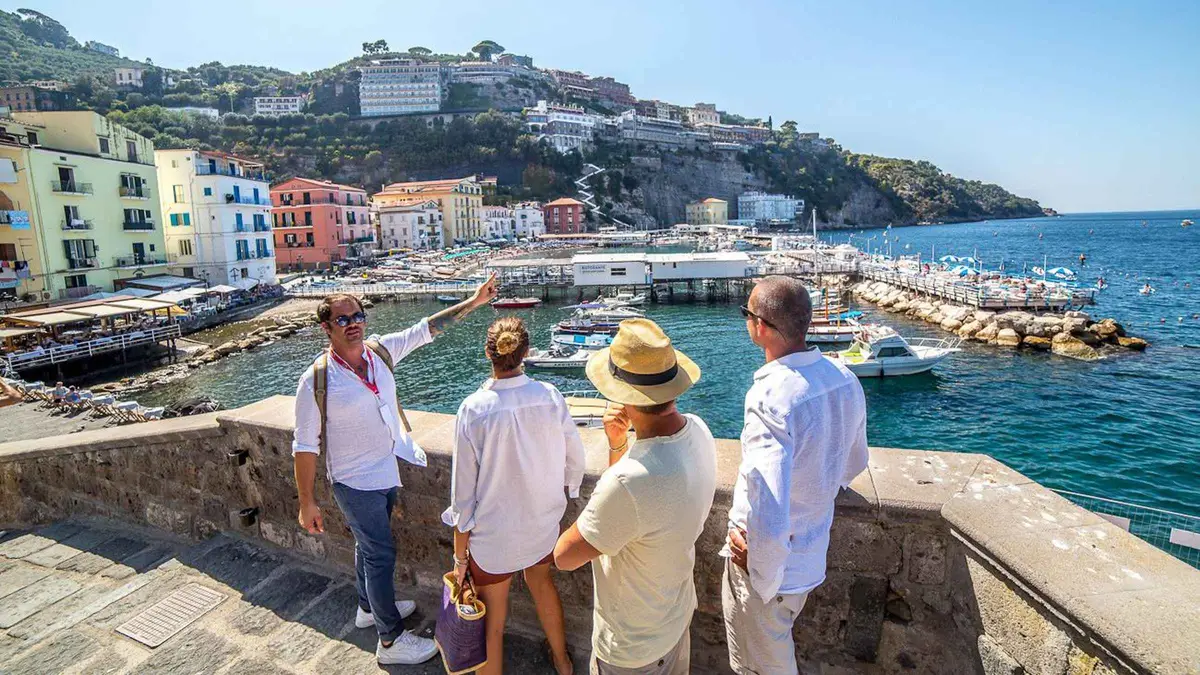 from $57
Sorrento: Walking Tour with Local Guide
A 2.5-hour private orientation walk with a local guide — the first-morning option.
Check Availability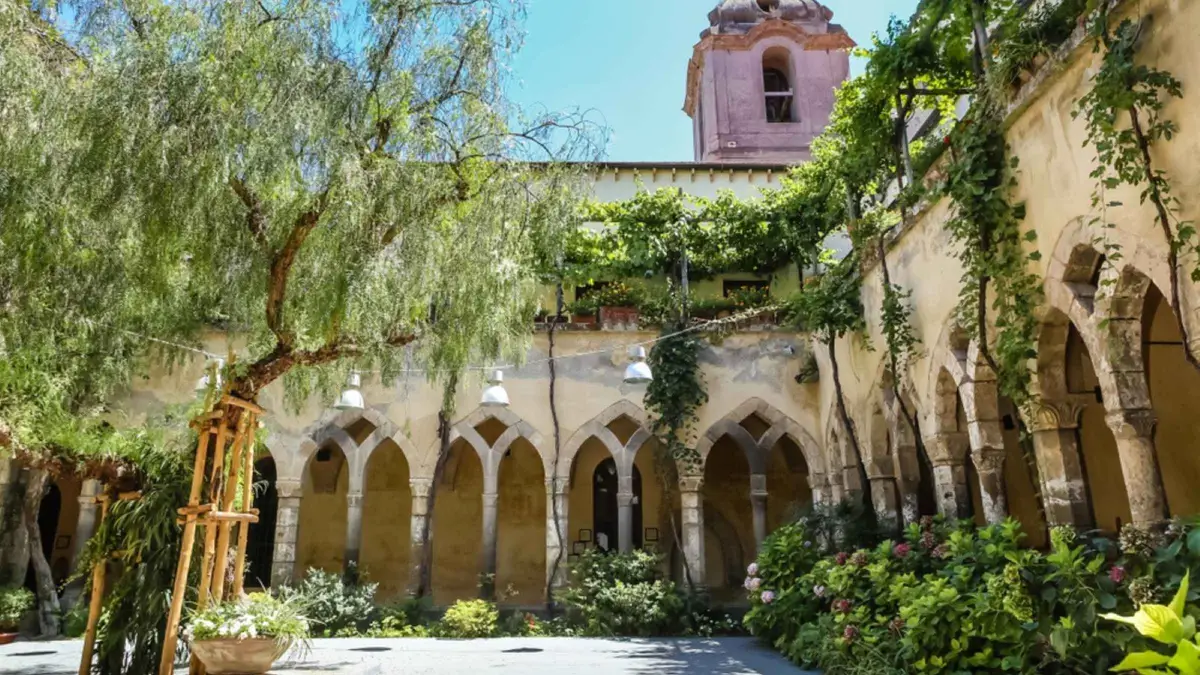 from $41
Sorrento: Walking Tour with Olive Oil and Limoncello Tasting
A two-hour private walk through the old town with olive oil and limoncello tasting stops.
Check Availability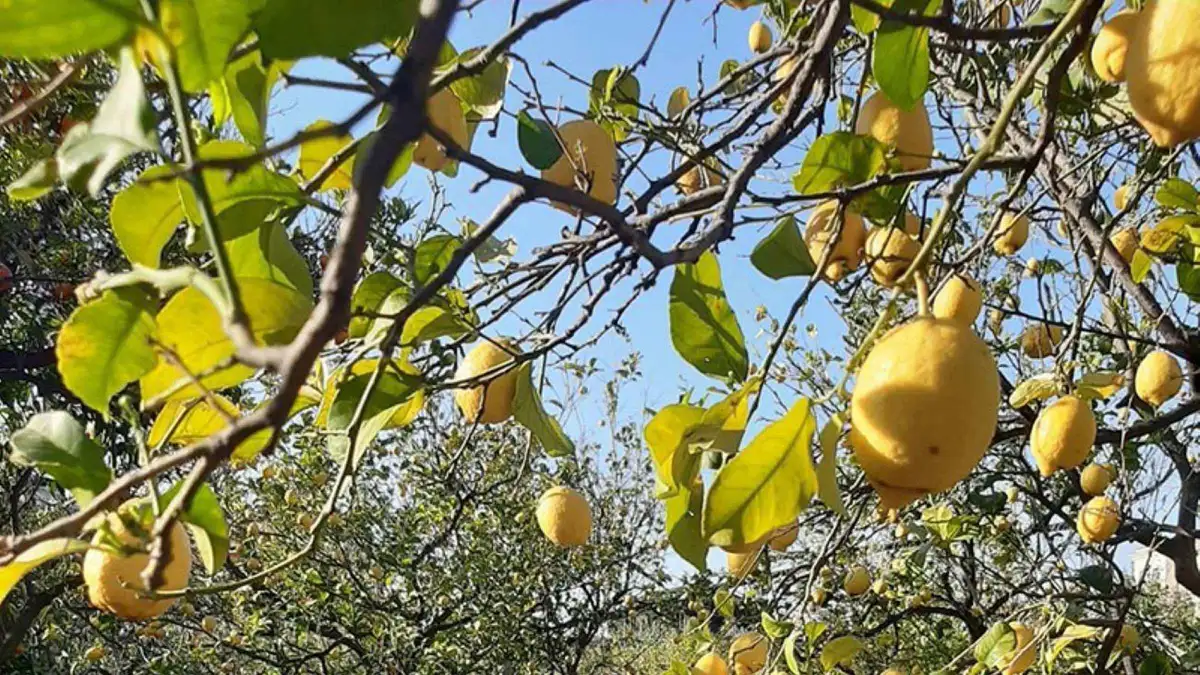 from $93
Sorrento Experience: Heritage Walk, Sea Views & Lemon Tour
A three-hour small-group heritage walk that ends at a lemon grove above the town.
Check AvailabilityPrices, ratings and details are the platform's own, checked in Q3 2026; dollar figures are the listed prices — the platform bills in your account's currency.
The patron and his basilica
Sant'Antonino Abate is the patron saint of Sorrento and of its ancient archdiocese, and the diocese calls this the most popular church in the city, which is not marketing: the church sits two minutes west of Piazza Tasso on a small square that locals still use as an address, and the tour groups that sweep through the centre thin out at exactly this door. When a ranking asks what you must see in Sorrento beyond the viewpoints, this is the church that makes the list, for reasons the nave barely hints at and the crypt explains.
The saint is worth a minute of setup. Antoninus was born in Campagna around the middle of the sixth century, became a monk, and died in Sorrento in the year 625; an oratory went up over his tomb within a few years of his death, and the present basilica was built in the eleventh century over a ninth-century oratory, partly swallowed by the new construction. The site was chosen because his remains rested here, near the city walls where the three main roads into Sorrento met. In 1924 Pius XI raised the church to a pontifical basilica, and the restorations after the 1980 Irpinia earthquake and again in 2010 and 2011 keep the structure honest about its age: eleventh-century bones, baroque dress, modern repairs.
Why does Sorrento keep his cult alive when most port towns have forgotten theirs? The miracles the church records are all practical ones: he is the saint who saved a child swallowed by a whale, who freed a possessed woman, who put a Saracen fleet to flight, who supplied fish to his devotees during a siege, and who saved boats in storms. A town of sailors chose the saint who answered at sea, and the basilica is where the receipts are kept.
The pick, in one sentence: walk in from the square, do the nave quickly, and save your time for the stairs down to the crypt, because that is the room the town actually prays in.
The crypt: where the devotion happens
The succorpo, the crypt below the presbytery, is the most visited part of the basilica by the diocese's own account, and it is reached down two marble staircases at the end of the side aisles, past balustrades sculpted in 1753.
The room stands on eight columns of precious marble recovered from the area's ancient pagan temples, four smaller inside the balustrade around the altar and four larger outside. At the centre stands the altar with the statue and the remains of the saint, and behind it the detail that explains the whole room: a silver oil lamp, kept permanently lit, which visitors touch while saying the prayer printed there. The gesture goes back to the saint's own legend, the healing of the bishop of Sorrento, who broke his leg falling from his mule and dreamed that Antoninus anointed the wound with oil from the Virgin's cruet; by morning the leg had healed. Devotees anoint their hands behind the altar to this day.
The walls are the archive. Six canvases by the Sorrentine painter Carlo Amalfi, born 1707, depict the patron bishops and saints of Sorrento, and the rest of the wall space is given to ex-votos, the tokens of graces received, dominated by paintings of prodigious rescues at sea. In the side corners sit two small altars: the left one holds the oldest artistic treasure in the building, a fourteenth-century fresco of the Madonna delle Grazie that came from the city walls and is considered the oldest image of the Mother of God in Sorrento; the right one holds the wooden crucifix covered in a silver sheath, carried in procession through the town in public calamities, as after the eruption of Vesuvius in 1984.
Give the crypt ten minutes and read the paintings as insurance claims from the age of sail; every one of them is somebody's grandfather, saved.
Roman columns in the nave
The basilica is a Latin-cross building in three aisles, and the reason it looks the way it does is recycling. The central nave runs on six arches carried by six columns, granite on one side and spoils of the Roman town on the other, in large part brought in from pagan temples and from the villas of Roman leisure that lined this coast. The diocese's history of the church records the material frankly; the eleventh-century builders did what their colleagues did across Campania and stripped the classical past for the columns their church needed.
Look for three things while you walk the nave. First, the fresco cycle: in the ovals between the arches and in the panels above the cornice, sixteen scenes from the life and miracles of Sant'Antonino, from the mason falling off the bell tower to the boy freed from the whale, painted so the story reads left to right as you walk towards the altar. Second, the ceiling, strong squares and gold rosettes on a blue ground carrying three canvases by Giambattista Lama from 1734. Third, the presbytery: the high altar came from the suppressed Benedictine monastery of the Santissima Trinità and was consecrated on 1 July 1814, and the wooden choir behind it carries the patron saints of Sorrento by Giacomo Del Pò, dated 1685, with the two big canvases beside them recording the lifting of the siege of 1648 and the plague of 1656.
The same reuse story continues outside: the small tenth-century door on the south side is framed by two ancient yellow-marble columns with Corinthian capitals, and the portico by the entrance keeps the whale bones under cover. The town's other great recycling project, the cathedral's Roman bell-tower base, is a five-minute walk away and makes a good comparison.
The feast of 14 February
Sant'Antonino's feast day falls on 14 February, which surprises visitors who know the date only for cards and roses. In Sorrento the day belongs to the abbot: the patron's feast is the town's own festival, and the saint's silver statue, dated 2 February 1564 on its base, is the object the devotion attaches to.
That statue has a story worth telling in the church it lives in. The first silver statue, made in 1494 by the Sorrentine goldsmith Giovanni di Rosania, was plundered and melted down for weapons during the Saracen raid of 13 June 1558. The town commissioned a replacement but ran out of money, and the work stalled; the legend says the saint himself appeared to the Neapolitan goldsmith, paid him the outstanding balance with a bag of coins and sat for the portrait. When the delegates from Sorrento finally arrived with the balance, the work was finished and the money already accounted for, so the miracle was recorded the practical way: the statue holds the bag, and the base carries the goldsmith's name, Scipio di Costanzo, and the date.
What exactly happens in town on 14 February, the route, the timing and the crowds, is not stated in the sources this page reads, so plan it as a day the church and the square will be busy and check the programme locally; the IAT tourist office on the same square is the place that knows. The rest of the year, the statue stands in the crypt above the always-lit lamp, and the ceiling of the nave above it carries Lama's 1734 scene of the saint freeing the possessed daughter of Prince Sicardo, the miracle that put the town under his protection in the first place.
Mass times and visiting a working church
Here is the honest part, because the mass-time question is the one travellers actually ask. The diocese's own page for the basilica leaves the celebrations table blank, with placeholders where weekday and holiday Mass times would go, and no clock hours are published for visiting either. When we checked on 12 September 2026, the diocese's mass times service for Sorrento-Castellammare listed celebrating churches by day but did not show the basilica's weekly table in a printable form.
The practical route: the basilica's own contact line is +39 081 878 1437 with the email basilicasantantonino@libero.it, both printed on the diocese page, and the church is simplest to catch around the obvious hours, morning and early evening, when Italian parish churches are customarily open and services run. Treat any timetable you find on a review site as a snapshot, not a schedule.
Visiting etiquette follows from the fact that this is a working church rather than a monument. There is no ticket and no queue, but there is a congregation: shoulders and knees covered is the custom across Italian churches, voices drop inside the nave, and the crypt is a place of prayer first and a museum second, so give the lamp and the kneelers the right of way. Photography is tolerated in the church as far as we could verify from the official pages, but no rule is published either way; the safe read is no flash during services, and ask the sacristan when in doubt.
If a Mass is in progress when you arrive, slip into the back of the nave, stay for a minute or come back later; the church will still be there, and the cathedral across the centre runs on the same logic.
How much time to give the basilica
The basilica scales from a ten-minute pause to half an hour of close looking, and the table routes the three honest versions: what each covers, what it skips, and the door-to-door time. Walk minutes are our estimates from GPS distances.
Pick the row that matches the day: on a port call the pause version is legitimate, and on a first visit the crypt is the difference between seeing a church and reading one.
| Routing | Time door to door | What it covers | What it skips |
|---|---|---|---|
| The pause | About 10 minutes | The facade and the whale bones in the porch, the nave frescoes at a walk | The crypt, the sacristy, the fresco cycle read in order |
| The full visit | 20 to 30 minutes | Everything in the pause, plus the crypt with the oil lamp and ex-votos, the tenth-century side door, the presbytery canvases | The sacristy rooms when they are closed; they open irregularly |
| With a guided walk | 2 to 2.5 hours | The basilica in the context of the centre's churches and lanes, with a guide carrying the stories | The close-up art history; a guide on the move compresses the crypt |
Dos and don'ts at the basilica
Five decisions that make the visit work, all argued above and each actionable at the door.
Do
- Walk the nave towards the altar first, reading the sixteen fresco scenes of the saint's miracles in order as you go
- Take the side-aisle stairs down to the crypt; the oil lamp and the ex-voto walls are the room the church exists for
- Find the whale bones in the entrance porch, above the urn of Monsignor Gargiulo, before you go inside
- Cover shoulders and knees, and keep the voice down; this is the town's working parish, not a pay-to-enter monument
- Step out to the small square afterwards; the IAT info point on it answers the hours and festival questions this page cannot
Don't
- Don't trust a printed mass timetable from a review site; the diocese publishes none, and the phone line is the source
- Don't photograph services or the praying faithful; the church publishes no photo rule, so the services get the benefit of the doubt
- Don't rush the porch; the tenth-century door and the whale bones are outside the nave and free of the crowd
- Don't visit only the nave; the crypt is the part the diocese itself calls the most visited, and skipping it wastes the stop
- Don't confuse the two saints' churches; the cathedral is the bishop's seat, this is the patron's house, and they are different buildings five minutes apart
Five things most visitors do not know about the basilica
The church hides its best stories in plain sight. Five details, each with its source, that most of the visitors walking the nave never register:
- The silver statue carries a money bag. The 1564 replacement statue holds a bag of coins because, by the legend the church records, the saint himself paid the goldsmith the balance the town could not [Diocese page for the basilica, fetched 12 September 2026].
- The first statue was melted into weapons. Giovanni di Rosania's 1494 silver statue was plundered and melted down during the Saracen raid of 13 June 1558 [Diocese page for the basilica].
- The whale bones are real and on display. The porch keeps the bones of the cetacean from the miracle of the boy swallowed and saved, above the urn of a long-serving rector [Diocese page for the basilica].
- The oldest image of Mary in Sorrento is in the crypt. A fourteenth-century fresco of the Madonna delle Grazie, brought in from the city walls, is considered the town's oldest depiction of the Mother of God [Diocese page for the basilica].
- A pope made it a pontifical basilica in 1924. Pius XI's decree of 12 December 1924 raised the church to a pontifical basilica, equal in privileges to the minor basilicas of Rome [Diocese page for the basilica].
Basilica di Sant'Antonino map: the square and the walks out
The basilica's own square and the stops within five minutes. Coordinates from Wikidata and the site's verified map, checked 12 September 2026.
Nearby the basilica: the three stops that pair with it
Walk minutes are our estimates from the GPS distances between the verified pins.
Piazza Tasso
The town's zero point, with the Tasso statue, the Carmine church and the parapet over the Vallone gorge. The two stops together are the shortest sightseeing loop in the centre.
2 min walk, east across the lightsSorrento Cathedral
The cathedral of Saints Philip and James, free and open as a working church, with the Roman-base bell tower and the 1924 facade. The patron's basilica and the bishop's cathedral in one morning.
About 5 min, south-east through the lanesSedile Dominova
The painted loggia of the old nobility, a free open-air curiosity on the way into the lanes of the centro storico.
About 3 min, south-east towards the old townBasilica di Sant'Antonino questions
Why is Sant'Antonino the patron saint of Sorrento?
Because the recorded miracles answer a port town's actual fears: he freed a boy swallowed by a whale, saved ships in storms, put a Saracen fleet to flight and fed the town under siege. He died in Sorrento in 625, his tomb became the site of the basilica, and the town's devotion is literally banked in the crypt's sea-rescue ex-votos.
What are the mass times at the basilica?
Not published. The diocese's own page leaves the celebrations table blank, and no official weekly table exists; the church's contact line is +39 081 878 1437, and services are safest to catch morning and early evening. The diocese's mass times service lists celebrating churches by day.
Is the Basilica di Sant'Antonino free to enter?
Yes. It is a working church with no ticket, booking or turnstile, and it sits on the free things to do in Sorrento list. Donation boxes exist; nothing is charged.
What is the whale bone in the porch about?
The bones of the cetacean from the basilica's founding miracle: a child swallowed by a whale and saved through the saint's intervention. The bones hang above the urn of Monsignor Francesco Gargiulo in the entrance porch, and the boy's rescue is also painted among the nave frescoes.
When is the feast of Sant'Antonino and what happens?
The feast falls on 14 February, the patron's day in Sorrento. What exactly runs on the day, route and timing, is not stated in the sources this page reads, so treat it as a busy day around the church and ask the IAT info point on the square for the programme.
Where do the Roman ruins in Sorrento show up?
In this basilica first: the nave's columns are granite and marble spoils from pagan temples and Roman coastal villas, the crypt stands on eight of them, and the south door is framed in ancient yellow marble. The cathedral's bell tower keeps a Roman-era base too, a five-minute walk east.
Where the basilica fits in a day
The basilica is the centre's shortest serious stop, which is the highest compliment a two-minute-from-the-square church can be paid. On the one-day itinerary it slots between Piazza Tasso and the old town lanes without a detour; on the two-day plan it earns the full crypt session on the morning the cathedral takes its turn.
Morning suits it: the nave is emptiest after the early services, the porch whale bones photograph clean, and the square's cafe tables are still free. Afternoon, the church becomes the cooling-off room between the port and the centre, and the crypt is the best ten minutes of shade in town that carries a story with it. On 14 February, plan the whole morning around it and let the town decide the rest.
The pick, in one sentence: give the basilica the twenty minutes after your first coffee, crypt included, and let it reset the clock before the rest of the centre; if a guide is speaking your language that morning, the guided walk folds it in without extra walking. When the town part of the plan is settled, the Sorrento city guide front page keeps the rest of the site one click away.
Basilica Sant Antonino on film
Three walk-throughs verified on YouTube: what the place actually looks like before you book anything.
Basilica of Sant'Antonino, Sorrento Italy (Basilica di Sant'Antonino)
Verified via oEmbed (Visit Places); matched query 'basilica sant antonino sorrento'.
Video: Visit PlacesBazilica Sant'Antonino (Sorrento)
Verified via oEmbed (MaRia Lovin); matched query 'basilica sant antonino sorrento'.
Video: MaRia LovinSorrento, Italy | Part 1: Piazza Tasso, The Church Santa Maria del Carmine, Piazza Sant'Antonino
Verified via oEmbed (Dante); matched query 'basilica sant antonino sorrento'.
Video: DanteVideos load from YouTube only when you press play.
Reviewed Q3 2026 (July–September 2026); next review Q4 2026. Prices, hours and terms are set by the venue or operator and confirmed at checkout.
We may earn a commission if you book through one of our links, at no extra cost to you. Full affiliate disclosure